Is Vaginoplasty the Right Choice for Vaginal Laxity? Clinical Criteria and Recovery Outlook in Jamwon-dong
Why Do Women Experience Changes in Pelvic Floor Integrity?
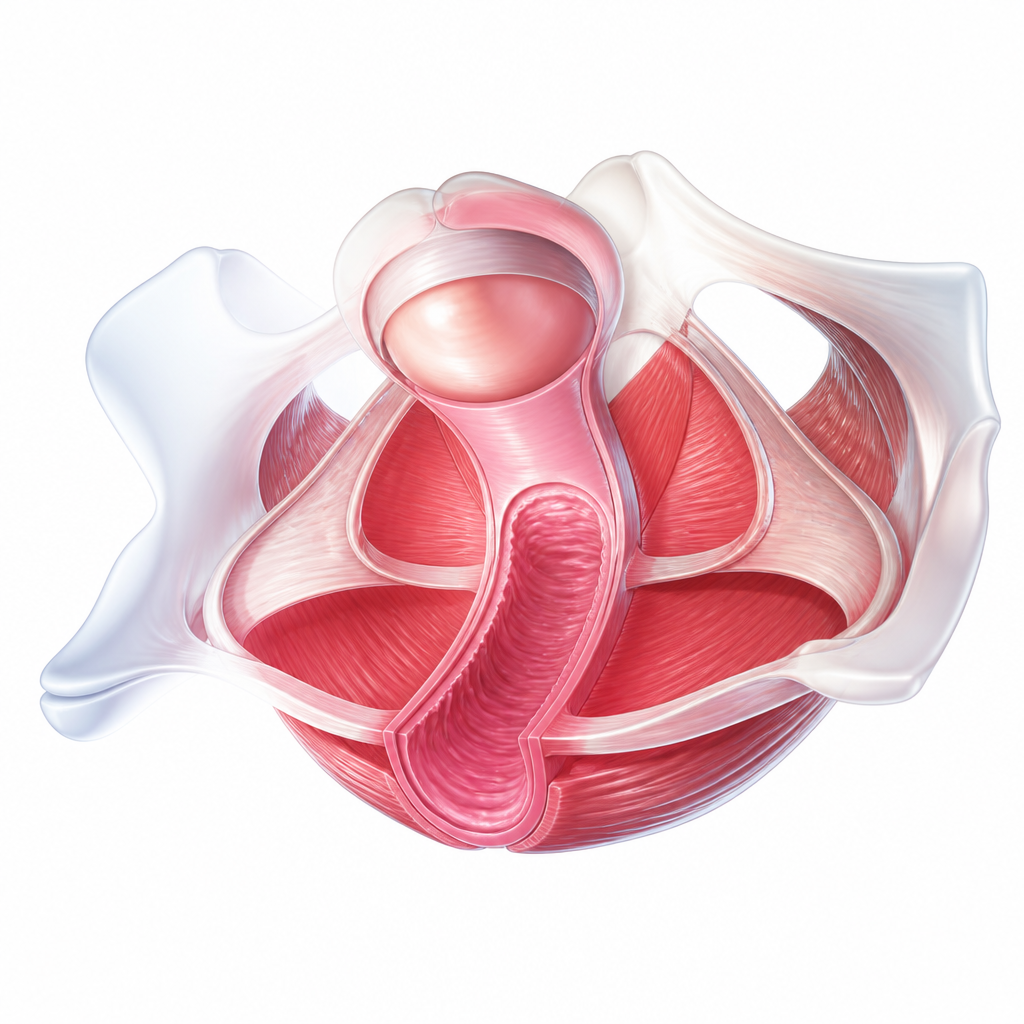
For many women seeking specialized gynecological evaluations in Jamwon-dong, changes in pelvic tissue support can significantly impact physical comfort and intimate health. Vaginal laxity is anatomically defined as the relaxation of the vaginal introitus and pelvic floor support tissues, a progressive condition primarily caused by the stretching and tearing of the endopelvic fascia and levator ani muscle during vaginal delivery or natural aging. As the supportive structures of the pelvic floor weaken, patients often experience secondary symptoms, such as recurring vaginal flatulence, reduced friction during intercourse, and mild stress urinary incontinence. Understanding the underlying pathophysiology is the first step toward determining whether conservative pelvic rehabilitation or reconstructive surgical intervention is necessary.
Treatment timing: Reconstructive surgery is highly indicated when vaginal laxity is graded as moderate-to-severe on standardized clinical scales or when pelvic floor descent reaches Stage II or higher under the POP-Q (Pelvic Organ Prolapse Quantifier) system.
Non-surgical care: Conservative management, such as pelvic floor muscle training (Kegel exercises) and energy-based vaginal tightening (laser or radiofrequency), is a highly reasonable approach for mild cases (Stage I) or for postpartum patients who still plan future pregnancies.
Treatment selection: The decision to undergo surgery depends on individual anatomical laxity, levator ani diastasis, the presence of concurrent rectocele or cystocele, and the patient’s long-term family planning goals.
What Are the Diagnostic Standards and Non-Surgical Alternatives?
According to domestic and international clinical guidelines, particularly those published in the American Journal of Obstetrics and Gynecology (AJOG, 2021), over 38% of multiparous women report subjective vaginal laxity, which strongly correlates with pelvic floor dysfunction and early-stage pelvic organ prolapse. During a professional examination in Jamwon-dong, specialists evaluate the tissue elasticity, vaginal caliber, and pelvic floor muscle contraction strength. When symptoms are mild, non-surgical alternatives offer highly effective pathways without requiring a recovery period.
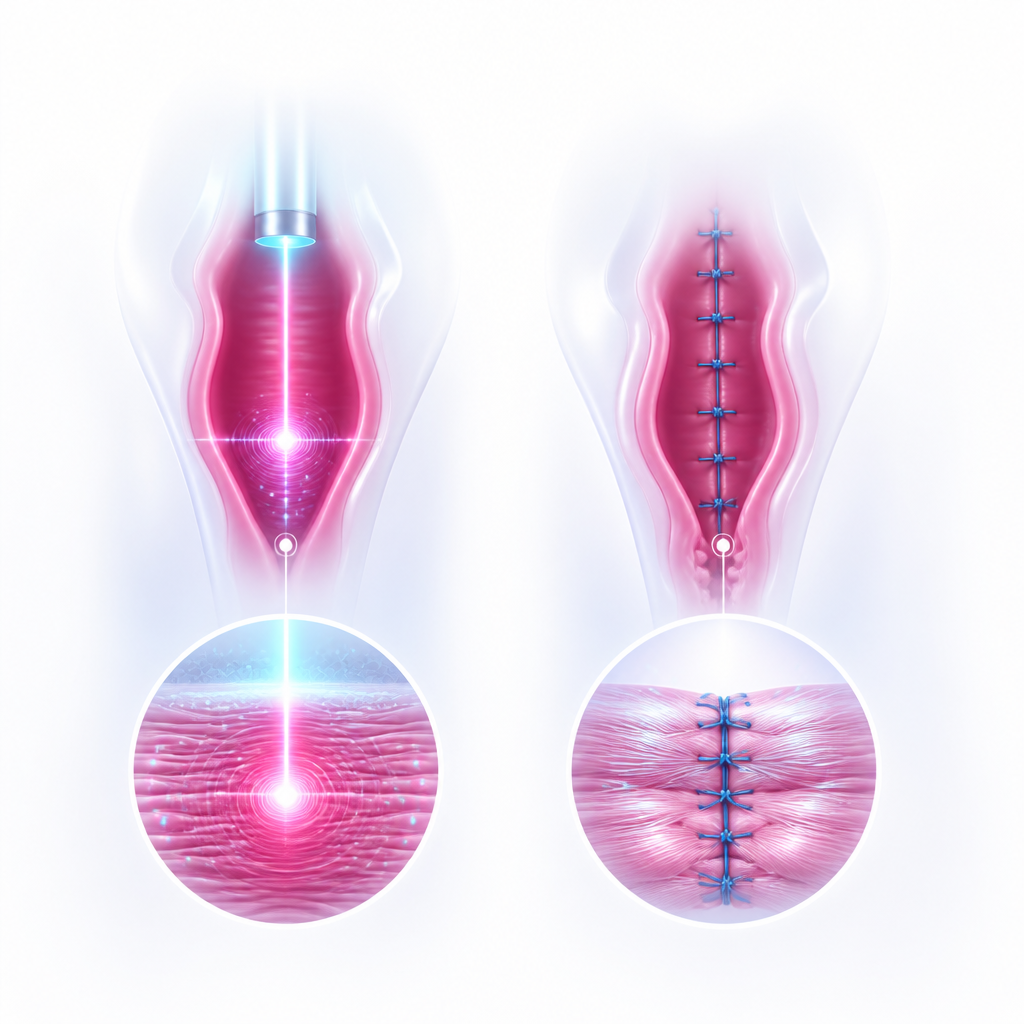
Pelvic floor muscle training (PFMT), often guided by biofeedback, helps restore the contractile tone of the pubococcygeus muscle. Additionally, non-invasive energy-based devices utilizing fractional carbon dioxide (CO2) laser or micro-focused radiofrequency (RF) deliver controlled thermal energy to the sub-epithelial layers. This process stimulates neocollagenesis and elastin remodeling, reinforcing the mucosal walls. However, while energy-based treatments excel at superficial mucosal tightening, they cannot structurally repair torn muscular fascias. Consequently, patients with significant structural defects may require posterior colporrhaphy combined with perineoplastic repair.
| Treatment Category | Primary Indication | Key Benefit | Key Limitation |
|---|---|---|---|
| Non-Surgical (Laser/RF) | Mild mucosal laxity, early postpartum rehabilitation | No downtime, minimal discomfort, outpatient procedure | Temporary tightening effect, requires periodic maintenance sessions |
| Surgical Vaginoplasty | Moderate-to-severe laxity, pelvic floor fascia tearing, rectocele | Permanent anatomical reconstruction and muscular repair | Requires surgical anesthesia and 6 to 8 weeks recovery time |
According to official guidelines from the American College of Obstetricians and Gynecologists (ACOG, 2020), both quantitative criteria, such as standardized digital palpation and POP-Q scoring, and patient-reported clinical symptoms should be reviewed together before proceeding with reconstructive pelvic surgeries.
Am I a Candidate for Reconstructive Vaginoplasty?
Determining the need for a surgical intervention requires a clear understanding of your current anatomical state and symptoms. Here is a checklist of common indicators assessed during clinical consultations:
- Persistent sensation of pelvic heaviness or a “bulging” feeling in the vaginal canal.
- Frequent vaginal flatulence or trapped air during physical exercises or position changes.
- Inability to retain tampons or a noticeable decrease in friction during intimacy that does not improve with Kegel exercises.
- A diagnosed separation of the levator ani muscle (diastasis) following childbirth.
- Concurrent mild urinary incontinence or difficulty empty the bladder/bowels due to a rectocele.
To help guide your path, consider the following clinical decision-making flow:
Step 1: If your pelvic floor assessment shows mild mucosal relaxation (Stage I) with intact pelvic fascia -> Then begin with a 3-month course of guided pelvic floor muscle training combined with non-invasive vaginal laser therapies.
Step 2: If moderate laxity is present along with levator ani diastasis, but you still plan future pregnancies -> Then opt for conservative management or temporary non-surgical treatments, delaying surgery until childbearing is fully completed.
Step 3: If you experience severe vaginal laxity (Stage II or higher) accompanied by anatomical defects like pelvic organ prolapse or rectocele, and childbearing is complete -> Then schedule a comprehensive consultation with a gynecologist in Jamwon-dong to discuss surgical posterior colporrhaphy and perineoplastic reconstruction.
However, outcomes may differ in exceptional cases such as patients with severe connective tissue disorders (e.g., Ehlers-Danlos syndrome) or severe systemic neuropathy, where surgical tissues may not heal with standard tensile strength.
Frequently Asked Questions FAQ
QWhat is the average recovery time after surgical vaginoplasty?
Surgical vaginoplasty typically requires a recovery period of 6 to 8 weeks for complete tissue healing. While most patients can return to light activities and desk work within 3 to 5 days, strenuous physical exercises, heavy lifting, and sexual intercourse must be strictly avoided for at least 6 to 8 weeks to prevent suture disruption and ensure optimal anatomical healing.
QDoes undergoing vaginoplasty affect future pregnancies and deliveries?
While the procedure does not impair your ability to become pregnant, a subsequent vaginal delivery can overstretch and tear the surgically reconstructed pelvic muscles and fascial layers. For this reason, clinical guidelines strongly recommend delaying surgical vaginoplasty until you have fully completed your childbearing plans.
QAre there effective non-surgical options available in Jamwon-dong clinics?
Yes, gynecological clinics in Jamwon-dong offer multiple non-surgical options, including fractional CO2 lasers, specialized high-intensity focused ultrasound (HIFU), radiofrequency (RF) tightening, and biofeedback-assisted pelvic floor muscle therapy. These procedures are highly suitable for patients experiencing mild vaginal laxity or those seeking safe, non-invasive maintenance therapies.
This content is general medical information, and individual treatment decisions should be made through imaging tests and in-person medical evaluation.
Author: Medical content editor based on medical information research
Reviewed by: Specialist consultation from the relevant department
Last reviewed: 2026-08-03
Reference guideline: 2020 American College of Obstetricians and Gynecologists (ACOG) Guidelines
Medical neutrality and closing note
The core of medical decision-making is not to follow a specific device or a trending procedure, but to choose an option that fits each patient’s individual anatomy, condition, risk level, and treatment goals. Every procedure has both advantages and limitations, so decisions should be made after sufficient discussion with an experienced specialist.
[Medical information and copyright notice]
This content is a professional medical column prepared based on medical consultation from 다움산부인과.
The infographics used in this article are created to support understanding and may differ from actual clinical results.
The information provided is a general medical guideline, and accurate diagnosis and treatment require an in-person evaluation by a qualified specialist.