Can Vaginal Tightening Simultaneously Improve Vaginal Dryness, Urinary Incontinence, and Vaginal Flatulence?
Why Do Vaginal Dryness, Incontinence, and Vaginal Flatulence Co-occur?
Many women experience a combination of vaginal dryness, mild stress urinary incontinence, and the involuntary release of air (often referred to as vaginal flatulence or vaginal wind). These symptoms, though seemingly distinct, frequently share a common underlying anatomical and physiological etiology. Understanding how these issues are interconnected is the first step toward finding an effective, multi-targeted treatment plan.
Treatment timing: Initiating therapy is most effective when mild vaginal laxity, early-stage stress urinary incontinence, or dryness begins to disrupt daily quality of life, ideally before severe pelvic organ prolapse develops.
Non-surgical care: Conservative management—including pelvic floor muscle training, topical moisturizers, and local estrogen therapy—is highly reasonable for mild symptoms (Grade 1 laxity or Stage I incontinence) without major structural tears.
Treatment selection: The choice of procedure should be guided by a thorough evaluation of anatomical laxity grading, mucosal tissue hydration levels, overall patient age, and individual recovery expectations.
What is the Pathophysiological Link Behind These Combined Symptoms?
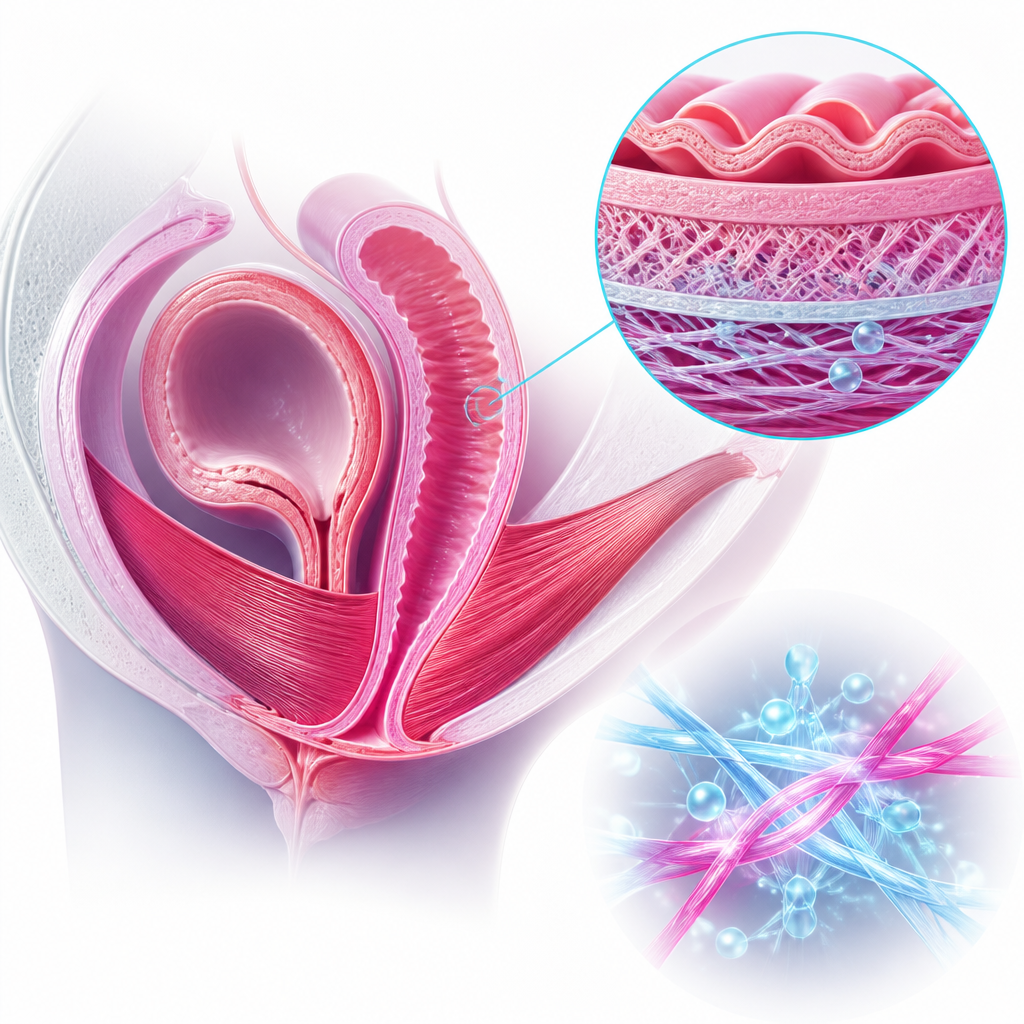
Vaginal laxity is defined as the relaxation and overstretching of the vaginal fibromuscular wall and the supporting pelvic floor muscles. This is a progressive condition typically initiated by vaginal childbirth, natural aging, and the hormonal shifts associated with hypoestrogenism. This progressive degradation of collagen fibers leads to wider pelvic floor dysfunction.
When the vaginal caliber expands and structural support weakens, air can easily become trapped within the vaginal canal during physical activity, leading to vaginal flatulence. Simultaneously, the loss of support underneath the urethra compromises the urinary sphincter mechanism, resulting in involuntary urine leakage during moments of increased intra-abdominal pressure—a condition known as stress urinary incontinence (SUI). Furthermore, the thinning of the mucosal epithelium leads to a dramatic drop in glycogen production, disrupting the natural vaginal microbiome and causing severe vaginal dryness.
According to domestic and international clinical guidelines, including those from the American College of Obstetricians and Gynecologists (ACOG, 2021), addressing these interrelated symptoms requires a comprehensive approach that targets both superficial mucosal regeneration and deeper fascial tightening.
| Treatment Modality | Primary Advantage | Clinical Limitation |
|---|---|---|
| Microablative CO2 Laser | Excellent mucosal regeneration, hydration, and superficial tightening. | Limited direct depth penetration to deeper pelvic floor muscles. |
| Focused Ultrasound (HIFU) | Targets the deep fibromuscular (SMAS) layer for structural support. | Less immediate hydration effect on the superficial mucosal surface. |
| Surgical Vaginoplasty | Permanent anatomical diameter reduction and immediate muscle repair. | Requires anesthesia, surgical recovery downtime, and carries risk of scarring. |
According to official guidelines or academic evidence, both quantitative criteria and clinical judgment should be reviewed together.
How Do Modern Tightening Treatments Work to Provide Simultaneous Relief?
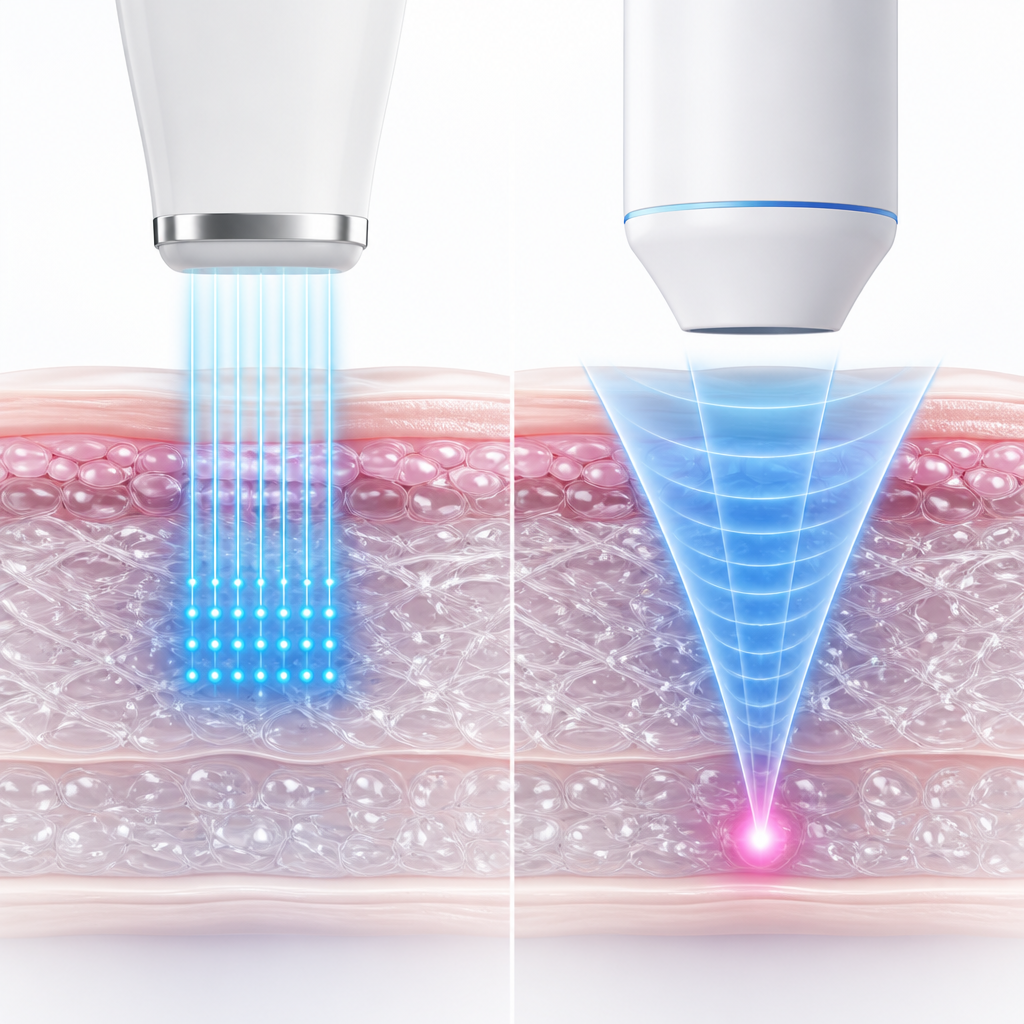
Non-surgical vaginal tightening procedures leverage energy-based technologies—such as fractional CO2 lasers and high-frequency radiofrequency—to deliver precise, controlled thermal energy into the vaginal wall. This thermal stimulation induces immediate tissue contraction and initiates a long-term wound healing cascade known as neocollagenesis.
According to multiple observational studies and meta-analyses published in PubMed (2022), energy-based treatments can lead to a 30% to 50% increase in elastic fiber and collagen density within 3 to 6 months post-treatment. This cellular regeneration thickens the vaginal epithelium, effectively restoring natural lubrication and maintaining a healthy, acidic pH. Simultaneously, the contraction and remodeling of the anterior vaginal wall provide improved support to the bladder neck and urethra, reducing the occurrence of mild urinary incontinence. The reduction in the overall diameter of the canal also minimizes the entry and entrapment of air, resolving vaginal flatulence.
However, outcomes may differ in exceptional cases such as severe anatomical pelvic organ prolapse (Grade III or IV) or advanced postmenopausal atrophy, where localized hormone replacement therapy or surgical reconstruction is clinically indicated.
Am I a Candidate for Non-Surgical Vaginal Tightening? A Self-Assessment Checklist
If you are experiencing one or more of these symptoms, evaluate your condition against the following clinical indicators to determine if you are a candidate for non-surgical vaginal rejuvenation:
- Do you experience mild urinary leakage when laughing, coughing, or exercising?
- Are you self-conscious about occasional gas-like sounds coming from the vaginal canal during physical movement?
- Does persistent dryness, irritation, or painful intimacy impact your overall quality of life?
- Are you looking for a non-surgical alternative with zero downtime due to a busy personal or professional schedule?
- Has an obstetrician-gynecologist confirmed that you do not have severe, structurally irreversible pelvic organ prolapse?
Treatment Decision Flow:
- Step 1: If symptoms are restricted to mild dryness and occasional flatulence, Then prioritize conservative therapy, pelvic floor muscle exercises (Kegels), and localized hydrating agents.
- Step 2: If moderate laxity is accompanied by mild stress urinary incontinence or recurrent vaginal wind, Then consider non-invasive energy-based tightening treatments (laser or radiofrequency) to stimulate deep tissue remodeling.
- Step 3: If severe pelvic floor descent or constant, high-volume urinary leakage is present, Then bypass non-surgical energy devices and seek a comprehensive surgical or pelvic reconstructive consultation.
Frequently Asked Questions FAQ
QCan non-surgical vaginal tightening completely cure stress urinary incontinence?
While mild stress urinary incontinence often improves significantly due to increased tissue elasticity and urethral support from collagen remodeling, moderate to severe cases may require surgical interventions like sling procedures. It is not guaranteed as a complete cure for advanced stages.
QHow long does it take to see results and return to normal activities?
Most non-invasive energy-based procedures require minimal downtime, allowing a return to daily activities immediately. However, sexual intercourse and swimming should generally be avoided for 3 to 7 days depending on the specific technology used, with collagen remodeling peaking at around 4 to 12 weeks.
This content is general medical information, and individual treatment decisions should be made through imaging tests and in-person medical evaluation.
Author: Medical content editor based on medical information research
Reviewed by: Specialist consultation from the relevant department
Last reviewed: 2026-07-30
Reference guideline: 2021 American College of Obstetricians and Gynecologists (ACOG) & 2020 North American Menopause Society (NAMS) Guidelines
Medical neutrality and closing note
The core of medical decision-making is not to follow a specific device or a trending procedure, but to choose an option that fits each patient’s individual anatomy, condition, risk level, and treatment goals. Every procedure has both advantages and limitations, so decisions should be made after sufficient discussion with an experienced specialist.
[Medical information and copyright notice]
This content is a professional medical column prepared based on medical consultation from 다움산부인과.
The infographics used in this article are created to support understanding and may differ from actual clinical results.
The information provided is a general medical guideline, and accurate diagnosis and treatment require an in-person evaluation by a qualified specialist.