Is Customized Laser Treatment Safe and Effective for Vulvar Whitening?
Why Does Vulvar Pigmentation Occur and How Does It Progress?
Vulvar hyperpigmentation is defined as the progressive accumulation of melanin within the basal layer of the labia majora and surrounding perineal epithelium. This anatomical region is highly sensitive to physiological and environmental triggers. The underlying mechanism involves the activation of melanogenesis within the local melanocytes. This biological pathway is frequently accelerated by fluctuating estrogen levels (such as during pregnancy or oral contraceptive use), chronic mechanical friction from tight clothing, localized micro-inflammation, and natural aging processes. Because the vulvar skin transitions from a keratinized outer layer to a delicate, non-keratinized mucosal surface, standard bleaching agents or aggressive physical peeling can result in chemical burns or chronic irritation.
Furthermore, without professional intervention, pigmentary changes in this area are typically progressive. Once melanocytes are chronically stimulated, they continue to transfer melanosomes to neighboring keratinocytes, deepening the overall skin tone over time. To address this concern safely, modern aesthetic gynecology focuses on energy-based devices that target excess pigment selectively while preserving the integrity of the delicate surrounding tissues. Understanding individual tissue response is critical before choosing any clinical intervention.
Treatment timing: Clinical interventions are recommended only after resolving any active local infections or dermatological conditions, and at least six months postpartum to allow natural hormone stabilization.
Non-surgical care: Conservative management, including the use of hypoallergenic barrier creams, reduction of mechanical friction, and avoidance of alkaline soaps, is reasonable for mild, friction-induced cases without deep dermal deposition.
Treatment selection: Safe and effective pigment clearance depends on customizing laser pulse width, wavelength, and cooling parameters based on the patient’s Fitzpatrick skin phototype and the specific mucosal thickness of the target area.
How Do Custom Laser Protocols Compare with Traditional Whitening Methods?
For a long time, individuals attempted to resolve intimate pigmentation using over-the-counter topical creams or superficial chemical peels. However, these methods often carry a high risk of post-inflammatory hyperpigmentation (PIH) in Fitzpatrick Skin Types III through VI, which are highly prevalent among East Asian populations. Topical acids can easily disrupt the fragile vaginal pH and cause contact dermatitis. In contrast, customized laser therapy utilizes specific wavelengths that penetrate directly to the pigment layer without disrupting the epidermal surface.
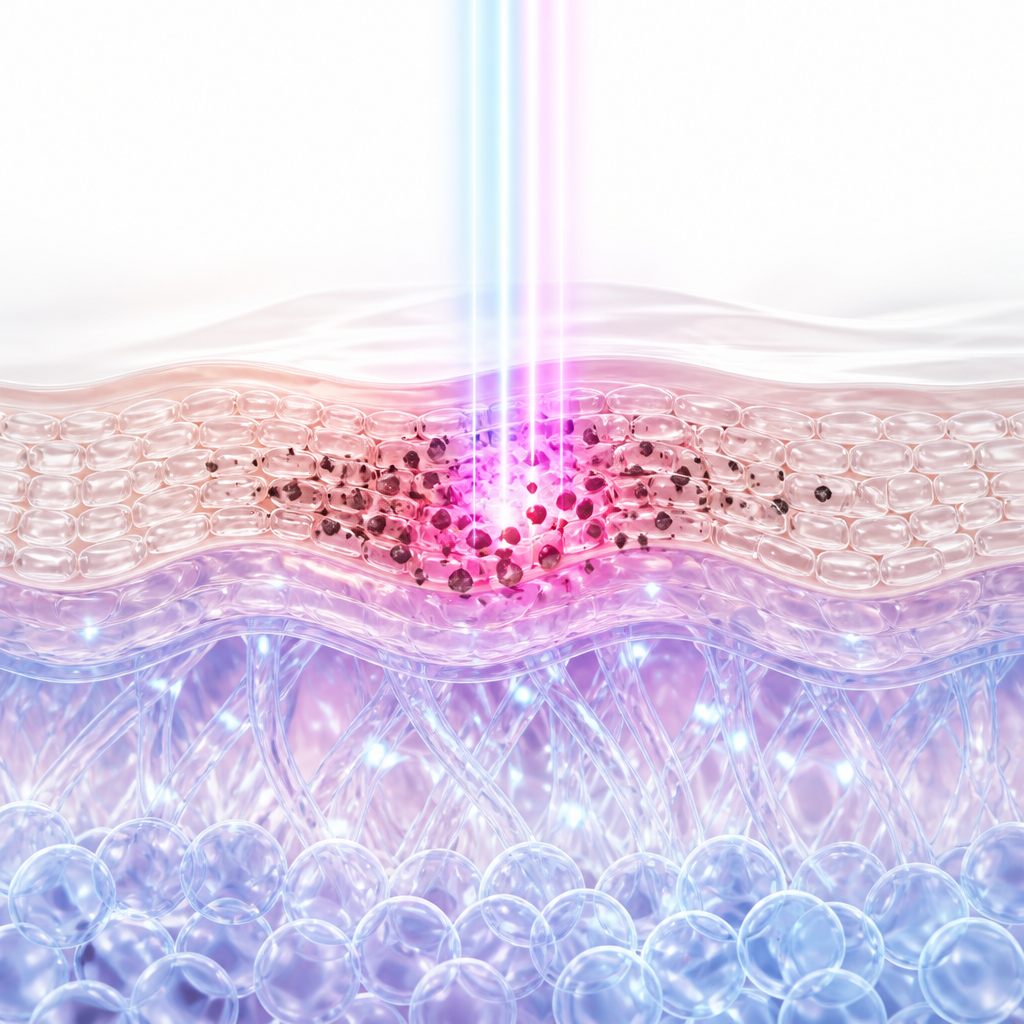
According to multiple observational studies and meta-analyses published in the Journal of Dermatological Treatment (2022), utilizing low-fluence picosecond lasers with a 1064nm wavelength resulted in a mean improvement of over 68% in pigmentation index within 4 to 6 sessions, while maintaining a post-inflammatory hyperpigmentation (PIH) rate of under 3%. This is achieved by operating well within the tissue’s thermal relaxation time (TRT), meaning the laser delivery is so rapid that heat does not dissipate into the surrounding healthy cells, minimizing the risk of thermal injury.
| Treatment Modality | Primary Mechanism | Key Advantage | Primary Limitation |
|---|---|---|---|
| Customized Laser (Nd:YAG/Pico) | Selective photothermolysis of melanin deep in the basal layer. | High safety profile; preserves mucosal barrier; minimal downtime. | Requires multiple structured sessions for optimal pigment clearance. |
| Chemical Peeling | Acid-induced epidermal exfoliation and cell turnover acceleration. | Low initial procedural cost and simple application process. | High risk of chemical burns, chronic pruritus, and rebound PIH. |
| Topical Bleaching Creams | Tyrosinase pathway inhibition to decrease new melanin synthesis. | Non-invasive self-care that can be performed at home. | Extremely slow action; high potential for contact dermatitis. |
According to official guidelines from the International Society of Aesthetic Gynecology, evaluating both quantitative pigment depth and individual mucosal sensitivity is paramount prior to selecting any energy-based treatment parameter.

What Is the Step-by-Step Decision Flow for Safe Laser Treatment?
Before proceeding with laser therapy, a thorough clinical evaluation is essential to confirm that hyperpigmentation is not linked to underlying pathological conditions, such as acanthosis nigricans, fungal infections, or vulvar intraepithelial neoplasia. Once pathological causes are ruled out, a customized plan can be established. Below is a safety checklist and clinical decision flow designed to ensure a successful outcome with minimal discomfort.
- Skin Barrier Evaluation: Confirm the absence of active vulvovaginitis, open micro-tears, or contact dermatitis.
- Phototype Calibration: Identify the correct Fitzpatrick skin phototype (typically Type III to V) to set the appropriate safe laser fluence.
- Hormonal Stability Assessment: Ensure the patient is not currently pregnant or undergoing acute hormone therapies that may trigger immediate re-pigmentation.
- Post-Treatment Care Plan: Commit to avoiding heat exposure, saunas, and friction-inducing activities for at least one week following the session.
To help guide your personal treatment journey, clinical experts recommend following this 3-step decision framework:
- IF you present with mild, superficial darkening caused purely by temporary mechanical friction, THEN begin with conservative management, such as eliminating tight garments and applying physiological barrier-repair creams for 8 to 12 weeks.
- IF the pigment persists, is deeply deposited in the dermal-epidermal junction, or is accompanied by post-inflammatory changes, THEN undergo a specialized diagnostic evaluation using a polarized dermatoscope to map melanin distribution.
- IF customized laser therapy is indicated, THEN initiate a low-fluence, fractional laser regimen paired with active epidermal cooling, scheduled at 3 to 4-week intervals to allow proper tissue regeneration.
However, outcomes may differ in exceptional cases such as patients presenting with severe systemic connective tissue disorders, keloidal tendencies, or undiagnosed vulvar lesions, which require comprehensive biopsy rather than aesthetic laser intervention.
Frequently Asked Questions FAQ
QIs the laser vulvar whitening procedure painful?
Most modern customized laser protocols utilize advanced epidermal cooling systems and specialized low-energy delivery modes, which significantly reduce discomfort. Patients generally report a mild, warm, snapping sensation. A local anesthetic cream is typically applied 30 minutes prior to the procedure to ensure a comfortable experience.
QHow many sessions are required, and when can I expect visible results?
While some initial brightening and texture improvement can be observed within 2 weeks after the first session, achieving a stable and uniform skin tone usually requires 3 to 5 sessions spaced approximately 4 weeks apart. The exact number of sessions depends on the depth of the melanin deposition and individual healing responses.
QWhat are the key precautions to take during the post-treatment recovery period?
For the first 3 to 5 days, patients should apply a prescribed regenerating cream and avoid activities that generate localized friction or heat, such as cycling, vigorous exercise, hot baths, and saunas. It is also advised to wear loose-fitting cotton underwear to protect the treated skin barrier during its initial recovery phase.

This content is general medical information, and individual treatment decisions should be made through imaging tests and in-person medical evaluation.
Author: Medical content editor based on medical information research
Reviewed by: Specialist consultation from the relevant department
Last reviewed: 2026-08-06
Reference guideline: 2022 International Society of Aesthetic Gynecology clinical consensus on pigmentary disorders
Medical neutrality and closing note
The core of medical decision-making is not to follow a specific device or a trending procedure, but to choose an option that fits each patient’s individual anatomy, condition, risk level, and treatment goals. Every procedure has both advantages and limitations, so decisions should be made after sufficient discussion with an experienced specialist.
[Medical information and copyright notice]
This content is a professional medical column prepared based on medical consultation from 다움산부인과.
The infographics used in this article are created to support understanding and may differ from actual clinical results.
The information provided is a general medical guideline, and accurate diagnosis and treatment require an in-person evaluation by a qualified specialist.