Areola Depigmentation in Jamwon-dong: How to Safely Restore Natural Skin Tones
Why Does Areolar Hyperpigmentation Occur and How Can It Be Safely Treated?
Areolar hyperpigmentation is a physiological or progressive darkening of the nipple-areola complex driven by increased melanin synthesis within active melanocytes, often triggered by hormonal fluctuations, friction, or genetic predisposition. Many individuals experience changes in areolar tone after pregnancy, breastfeeding, or due to prolonged mechanical friction. While this color change is entirely natural, it can become a source of aesthetic concern. When seeking professional medical advice for areola depigmentation in Jamwon-dong, understanding the biological mechanism and choosing a clinically proven, safe method is paramount to avoiding secondary complications.
Treatment timing: Clinical interventions are recommended at least 6 months postpartum or after breastfeeding has ceased to allow hormonal levels to stabilize.
Non-surgical care: Conservative management using medical-grade topical brightening agents and minimizing friction is reasonable for mild, epidermal-only pigment changes.
Treatment selection: Clinical decisions are guided by individual epidermal thickness, the depth of melanin deposits, historical risk of post-inflammatory hyperpigmentation (PIH), and expected recovery periods.

Understanding the Biological Mechanism of Areolar Color Changes
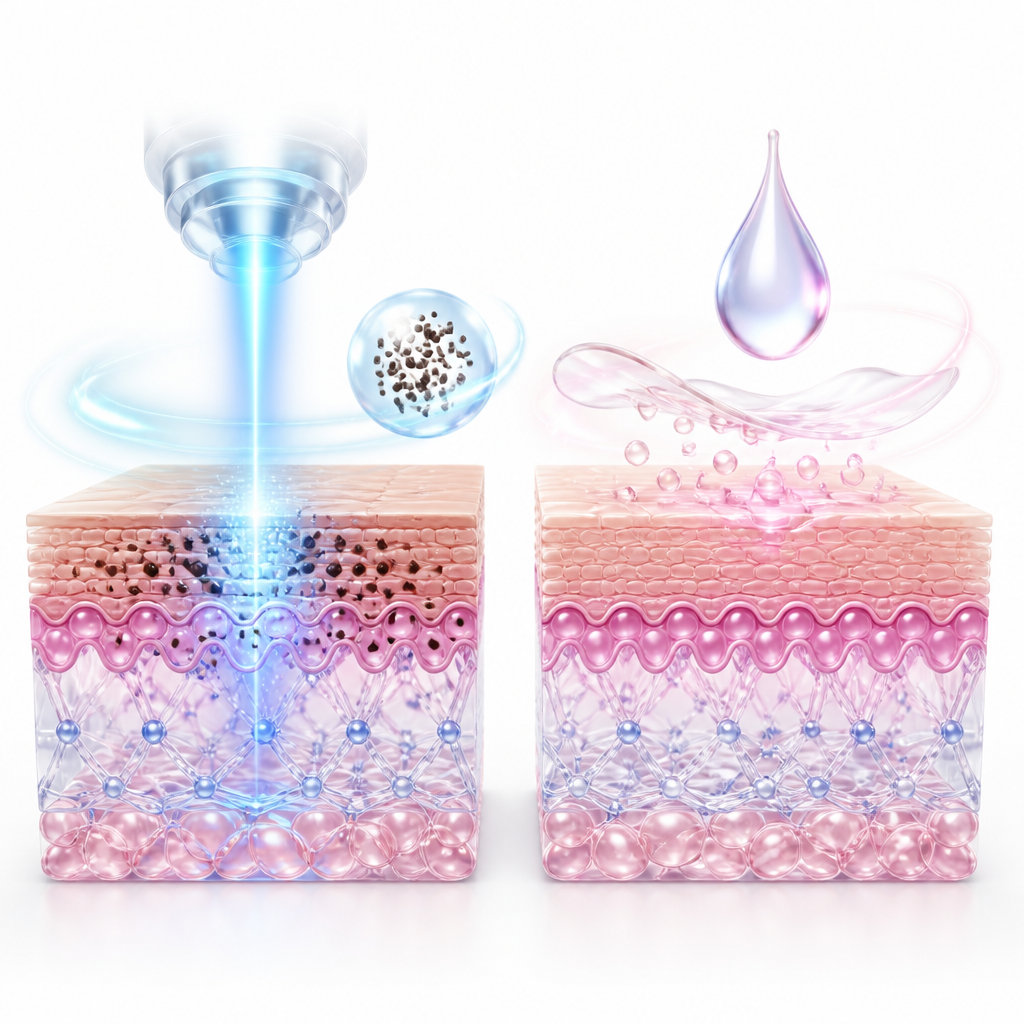
The skin of the nipple-areola complex is highly specialized, characterized by a high density of melanocytes and a rich supply of sensory nerve endings. Melanin synthesis within this area is highly sensitive to estrogen and progesterone. During periods of significant hormonal shifts, these hormones stimulate the melanocyte-stimulating hormone (MSH) receptors, leading to an overproduction of eumelanin. This progressive darkening is not merely superficial; over time, the pigment deposits can settle deeper into the dermal-epidermal junction.
According to multiple observational studies and meta-analyses published in the Journal of Cosmetic Dermatology (2022), laser-assisted pigment reduction shows a 70% to 85% improvement rate after 3 to 5 treatment sessions. Unlike generic skin whitening, areola depigmentation requires targeted wavelengths that selectively destroy melanin without causing thermal damage to the surrounding sensitive tissues. Utilizing the wrong energy settings or aggressive chemical agents can lead to post-inflammatory hyperpigmentation (PIH) or permanent hypopigmentation, where the skin loses its natural pigment entirely.
| Treatment Method | Primary Advantage | Clinical Limitation | Expected Sessions |
|---|---|---|---|
| Pico-second Laser Toning | High targeting accuracy with minimal thermal damage | Requires multiple sessions for deep dermal pigment | 3 5 Sessions |
| Chemical Peeling | Evens out superficial epidermal texture and tone | Risk of irritation on highly sensitive skin types | 4 6 Sessions |
| Topical Melanin Inhibitors | Convenient home-based supportive maintenance | Extremely slow onset of action; ineffective on deep pigment | Ongoing (Months) |
According to official guidelines from international dermatological societies, both quantitative pigment depth measurements and individual clinical history must be evaluated together prior to initiating laser depigmentation.
However, outcomes may differ in exceptional cases such as patients presenting with active eczema, localized contact dermatitis, or a strong genetic predisposition to hypertrophic scarring or keloids. In these cases, treatment must be delayed until the underlying skin barrier is fully restored.
Am I a Good Candidate for Areola Whitening? A Clinical Checklist
Before proceeding with treatment at our specialty OB/GYN department in Jamwon-dong, it is essential to evaluate if your skin is ready for pigment correction. Below is a diagnostic checklist commonly used to determine suitability:
- Your areolar pigment changes have stabilized and are not actively darkening due to current pregnancy or ongoing hormone therapy.
- The target area is free from active skin infections, open wounds, or severe dry patches.
- You do not have a history of abnormal scarring (keloids) in the chest or breast region.
- You have realistic expectations and understand that color restoration is a gradual process requiring multiple treatment sessions.
- You are committed to adhering to strict post-treatment care guidelines, including avoiding friction and applying prescribed regenerative creams.
To help guide your path to treatment, we utilize a structured clinical decision-making flow:
Step 1: If pigment accumulation is primarily epidermal, then gentle laser toning combined with topical barrier support is initiated.
Step 2: If dermal pigment or high skin sensitivity is present, then a low-fluence, multi-pass laser protocol with active epidermal cooling is selected.
Step 3: If post-inflammatory hyperpigmentation risks are high, then intensive post-procedure cooling, soothing recovery agents, and strict friction avoidance are maintained throughout the recovery phase.
Frequently Asked Questions FAQ
QIs areola depigmentation painful?
Most patients experience mild discomfort, often described as a light snapping sensation. To manage this, a topical numbing cream is applied 30 to 40 minutes prior to the procedure, ensuring a highly tolerable and comfortable treatment environment.
QHow many sessions are typically required for visible results?
While some superficial brightening can be observed after the second session, most clinical protocols require 3 to 5 sessions spaced 3 to 4 weeks apart to achieve significant, natural-looking pigment reduction.
QAre there any side effects like scarring or loss of sensitivity?
When performed using precise, low-fluence medical laser systems, the risk of scarring or sensory loss is exceptionally low. However, temporary redness, mild swelling, and micro-crusting may occur for a few days post-treatment as the skin heals.
This content is general medical information, and individual treatment decisions should be made through imaging tests and in-person medical evaluation.
Author: Medical content editor based on medical information research
Reviewed by: Specialist consultation from the relevant department
Last reviewed: 2026-07-24
Reference guideline: 2023 International Society of Aesthetic Plastic Surgery (ISAPS) Pigmentation Guidelines
Medical neutrality and closing note
The core of medical decision-making is not to follow a specific device or a trending procedure, but to choose an option that fits each patient’s individual anatomy, condition, risk level, and treatment goals. Every procedure has both advantages and limitations, so decisions should be made after sufficient discussion with an experienced specialist.
[Medical information and copyright notice]
This content is a professional medical column prepared based on medical consultation from 다움산부인과.
The infographics used in this article are created to support understanding and may differ from actual clinical results.
The information provided is a general medical guideline, and accurate diagnosis and treatment require an in-person evaluation by a qualified specialist.